
Clinical research
The health effects of sunlight are supported by decades of research - Solius is built on that science. Chat with Sunny to explore the studies behind the science.
See the studies - click to filter by category
Featured research
Emerging research in leading medical and scientific journals suggests that targeted UVB light exposure may influence biological pathways related to vitamin D metabolism, immune regulation, and systemic health. Solius is designed around this growing body of evidence.
Published in leading peer-reviewed journals.
Grounded in photobiology and clinical nutrition research.
Based on research in sun exposure biology, endocrinology, and epidemiology.
Supported by clinical and population-level evidence on UVB light and vitamin D.

Learn More
Featured research
Emerging research in leading medical and scientific journals suggests that targeted UVB light exposure may influence biological pathways related to vitamin D metabolism, immune regulation, and systemic health. Solius is designed around this growing body of evidence.
Published in leading peer-reviewed journals.
Grounded in photobiology and clinical nutrition research.
Based on research in sun exposure biology, endocrinology, and epidemiology.
Supported by clinical and population-level evidence on UVB light and vitamin D.
Learn More
Featured research
Emerging research in leading medical and scientific journals suggests that targeted UVB light exposure may influence biological pathways related to vitamin D metabolism, immune regulation, and systemic health. Solius is designed around this growing body of evidence.
Published in leading peer-reviewed journals.
Grounded in photobiology and clinical nutrition research.
Based on research in sun exposure biology, endocrinology, and epidemiology.
Supported by clinical and population-level evidence on UVB light and vitamin D.
Learn More
Selected findings

This mouse study tested whether Solius UVB light therapy could influence gut health, comparing vitamin D sufficient and deficient mice given either a single exposure or six repeated exposures over 14 days. Repeated exposures significantly increased vitamin D levels to match sufficient-diet controls without injury to the skin. Notably, repeated therapy significantly altered gut microbiota composition and fecal metabolome, especially in vitamin D–deficient mice, enriching bacteria linked to metabolic health and leanness while increasing beneficial compounds like short-chain fatty acids, bile acid derivatives, and tryptophan metabolites. Pathway analysis further suggested UVB exposure inhibited oxidative stress and tumor-related signaling while activating anti-inflammatory pathways. Serum metabolomic changes were much smaller than fecal changes, suggesting the effects were concentrated in the gut rather than just reflecting systemic responses. Overall, the study concludes Solius UVB therapy can be safely used to reshape gut microbial and metabolic profiles in a way that promotes gut health.
Featured Research
This mouse study tested whether Solius UVB light therapy could influence gut health, comparing vitamin D sufficient and deficient mice given either a single exposure or six repeated exposures over 14 days. Repeated exposures significantly increased vitamin D levels to match sufficient-diet controls without injury to the skin. Notably, repeated therapy significantly altered gut microbiota composition and fecal metabolome, especially in vitamin D–deficient mice, enriching bacteria linked to metabolic health and leanness while increasing beneficial compounds like short-chain fatty acids, bile acid derivatives, and tryptophan metabolites. Pathway analysis further suggested UVB exposure inhibited oxidative stress and tumor-related signaling while activating anti-inflammatory pathways. Serum metabolomic changes were much smaller than fecal changes, suggesting the effects were concentrated in the gut rather than just reflecting systemic responses. Overall, the study concludes Solius UVB therapy can be safely used to reshape gut microbial and metabolic profiles in a way that promotes gut health.
Featured Research
Skin-directed Solius UVB light therapy increases vitamin D levels and alters intestinal microbiome and metabolome homeostasis
Frontiers in Microbiology
This mouse study tested whether Solius UVB light therapy could influence gut health, comparing vitamin D sufficient and deficient mice given either a single exposure or six repeated exposures over 14 days. Repeated exposures significantly increased vitamin D levels to match sufficient-diet controls without injury to the skin. Notably, repeated therapy significantly altered gut microbiota composition and fecal metabolome, especially in vitamin D–deficient mice, enriching bacteria linked to metabolic health and leanness while increasing beneficial compounds like short-chain fatty acids, bile acid derivatives, and tryptophan metabolites. Pathway analysis further suggested UVB exposure inhibited oxidative stress and tumor-related signaling while activating anti-inflammatory pathways. Serum metabolomic changes were much smaller than fecal changes, suggesting the effects were concentrated in the gut rather than just reflecting systemic responses. Overall, the study concludes Solius UVB therapy can be safely used to reshape gut microbial and metabolic profiles in a way that promotes gut health.
Featured Research
Multiple Articles
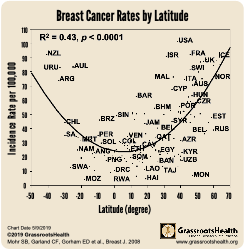
Populations in lower-sun latitudes show higher rates of multiple chronic diseases, largely attributed to reduced UVB-driven vitamin D synthesis and other non-vitamin-D biological pathways.
Featured Research
Multiple Articles
Populations in lower-sun latitudes show higher rates of multiple chronic diseases, largely attributed to reduced UVB-driven vitamin D synthesis and other non-vitamin-D biological pathways.
Featured Research
Higher disease rates in low sun latitudes
Multiple Articles
Populations in lower-sun latitudes show higher rates of multiple chronic diseases, largely attributed to reduced UVB-driven vitamin D synthesis and other non-vitamin-D biological pathways.
Featured Research

This randomized, placebo-controlled, clinical trial showed that the SOLIUS system effectively increased 25(OH)D concentrations in individuals with vitamin D deficiency or insufficiency, offering a safe solution for improving vitamin D status. The treatment group showed a significant increase in serum 25(OH)D concentrations, with an average increase of 10.2 ng/ml (p<0.01), compared to a decrease of 2.3 ng/ml in the control group.
Featured Research
This randomized, placebo-controlled, clinical trial showed that the SOLIUS system effectively increased 25(OH)D concentrations in individuals with vitamin D deficiency or insufficiency, offering a safe solution for improving vitamin D status. The treatment group showed a significant increase in serum 25(OH)D concentrations, with an average increase of 10.2 ng/ml (p<0.01), compared to a decrease of 2.3 ng/ml in the control group.
Featured Research
Effectiveness of SOLIUS UVB Light System in Enhancing Serum 25-Hydroxyvitamin D Concentrations: A Randomized Controlled Trial
Anticancer Research
This randomized, placebo-controlled, clinical trial showed that the SOLIUS system effectively increased 25(OH)D concentrations in individuals with vitamin D deficiency or insufficiency, offering a safe solution for improving vitamin D status. The treatment group showed a significant increase in serum 25(OH)D concentrations, with an average increase of 10.2 ng/ml (p<0.01), compared to a decrease of 2.3 ng/ml in the control group.
Featured Research
This large UK Biobank study of 419,007 adults found that higher habitual UV exposure was associated with significantly lower all-cause mortality, cardiovascular mortality, and non-skin cancer mortality, with clear dose-response trends. Critically, higher UV exposure showed no meaningful increase in skin cancer mortality. Counterfactual modeling quantified the trade-off directly: shifting the entire population to high UV exposure would prevent approximately 5,000 deaths from cardiovascular disease and internal cancers at the cost of only a few dozen additional skin cancer deaths - a net survival benefit ratio of roughly 100 to 1. Proteomic analysis in a 44,712-person subcohort identified the biological mechanisms as operating primarily through three non-vitamin D pathways - immunoregulatory, mucosal-barrier, and cardiorenal-neuroendocrine - confirming that the mortality benefits of UV exposure cannot be replicated by oral vitamin D supplementation. The authors conclude that current public health guidance, which frames sunlight primarily as a skin cancer hazard to be avoided, is inconsistent with the weight of evidence and warrants reappraisal. Limitations include the observational design, a White European-only cohort, and preprint status pending peer review. Builds upon this published research:
Featured Research
This large UK Biobank study of 419,007 adults found that higher habitual UV exposure was associated with significantly lower all-cause mortality, cardiovascular mortality, and non-skin cancer mortality, with clear dose-response trends. Critically, higher UV exposure showed no meaningful increase in skin cancer mortality. Counterfactual modeling quantified the trade-off directly: shifting the entire population to high UV exposure would prevent approximately 5,000 deaths from cardiovascular disease and internal cancers at the cost of only a few dozen additional skin cancer deaths - a net survival benefit ratio of roughly 100 to 1. Proteomic analysis in a 44,712-person subcohort identified the biological mechanisms as operating primarily through three non-vitamin D pathways - immunoregulatory, mucosal-barrier, and cardiorenal-neuroendocrine - confirming that the mortality benefits of UV exposure cannot be replicated by oral vitamin D supplementation. The authors conclude that current public health guidance, which frames sunlight primarily as a skin cancer hazard to be avoided, is inconsistent with the weight of evidence and warrants reappraisal. Limitations include the observational design, a White European-only cohort, and preprint status pending peer review. Builds upon this published research:
Featured Research
Pre-Print: Risk–benefit balance of habitual ultraviolet exposure for cardiovascular, cancer, and skin cancer mortality
medRxiv
This large UK Biobank study of 419,007 adults found that higher habitual UV exposure was associated with significantly lower all-cause mortality, cardiovascular mortality, and non-skin cancer mortality, with clear dose-response trends. Critically, higher UV exposure showed no meaningful increase in skin cancer mortality. Counterfactual modeling quantified the trade-off directly: shifting the entire population to high UV exposure would prevent approximately 5,000 deaths from cardiovascular disease and internal cancers at the cost of only a few dozen additional skin cancer deaths - a net survival benefit ratio of roughly 100 to 1. Proteomic analysis in a 44,712-person subcohort identified the biological mechanisms as operating primarily through three non-vitamin D pathways - immunoregulatory, mucosal-barrier, and cardiorenal-neuroendocrine - confirming that the mortality benefits of UV exposure cannot be replicated by oral vitamin D supplementation. The authors conclude that current public health guidance, which frames sunlight primarily as a skin cancer hazard to be avoided, is inconsistent with the weight of evidence and warrants reappraisal. Limitations include the observational design, a White European-only cohort, and preprint status pending peer review. Builds upon this published research:
Featured Research
Featured Research
The American Journal of Clinical Nutrition
Analysis of data from the VITAL trial found that 4-years of supplementation with 2000 IU/day vitamin D3 reduced telomere attrition by 140 bp, suggesting that vitamin D3 daily supplementation might have a role in counteracting telomere erosion or cell senescence.
Featured Research
The American Journal of Clinical Nutrition
Analysis of data from the VITAL trial found that 4-years of supplementation with 2000 IU/day vitamin D3 reduced telomere attrition by 140 bp, suggesting that vitamin D3 daily supplementation might have a role in counteracting telomere erosion or cell senescence.
Featured Research
British Journal of Dermatology
A randomized trial, published in the British Journal of Dermatology, compared full-body narrowband UVB (NB-UVB) exposure three times per week against 1,600 IU of oral vitamin D3 daily over six weeks in vitamin D–deficient adults. UVB phototherapy was significantly more effective at raising vitamin D levels than oral supplementation. The UVB group saw a mean increase of roughly 22.3 ng/mL, compared to about 15 ng/mL in the supplement group.
Featured Research
British Journal of Dermatology
A randomized trial, published in the British Journal of Dermatology, compared full-body narrowband UVB (NB-UVB) exposure three times per week against 1,600 IU of oral vitamin D3 daily over six weeks in vitamin D–deficient adults. UVB phototherapy was significantly more effective at raising vitamin D levels than oral supplementation. The UVB group saw a mean increase of roughly 22.3 ng/mL, compared to about 15 ng/mL in the supplement group.
Featured Research
Journal of the National Cancer Institute
A large study following more than 62,000 participants evaluated how lifetime UVA and UVB each related to melanoma risk independently of one another. They found that UVB exposure was not associated with increased melanoma risk after adjusting for UVA exposure and incidence of melanoma was significantly decreased for the highest category of UVB exposure. In contrast, higher lifetime UVA exposure was associated with increased melanoma risk. These findings add to growing evidence that different wavelengths of UV light have distinct biological effects and suggest UVB is associated with lower melanoma risk than UVA.
Featured Research
Journal of the National Cancer Institute
A large study following more than 62,000 participants evaluated how lifetime UVA and UVB each related to melanoma risk independently of one another. They found that UVB exposure was not associated with increased melanoma risk after adjusting for UVA exposure and incidence of melanoma was significantly decreased for the highest category of UVB exposure. In contrast, higher lifetime UVA exposure was associated with increased melanoma risk. These findings add to growing evidence that different wavelengths of UV light have distinct biological effects and suggest UVB is associated with lower melanoma risk than UVA.
Featured Research
Photodermatology, Photoimmunology & Photomedicine
UVB exposure can influence cardiovascular and metabolic health through nitric oxide (NO)–mediated pathways that do not require vitamin D synthesis. This review summarizes the systemic effects of UV radiation on hypertension and several metabolic diseases such as obesity and diabetes. UVB stimulates NO production in the skin, which enters circulation to promote vasodilation, lower blood pressure, and reduce cardiovascular risk.
Featured Research
Photodermatology, Photoimmunology & Photomedicine
UVB exposure can influence cardiovascular and metabolic health through nitric oxide (NO)–mediated pathways that do not require vitamin D synthesis. This review summarizes the systemic effects of UV radiation on hypertension and several metabolic diseases such as obesity and diabetes. UVB stimulates NO production in the skin, which enters circulation to promote vasodilation, lower blood pressure, and reduce cardiovascular risk.
Featured Research
Proceedings of the National Academy of Sciences
This paper describes how UVB activates a broad range of hormones, neurohormones, neurotransmitters, and immune mediators that influence mood, stress balance, and neuroprotection. The paper further shows that these UVB-induced signals are tightly coordinated by a skin-based neuro-immuno-endocrine system, which processes and integrates them before sending them throughout the body. These signals travel to the brain and other organs through both the bloodstream and direct nerve pathways, where they help regulate whole-body homeostasis. In doing so, UVB exposure can modulate immune activity, activate central stress-response systems, and influence the function of multiple organ systems.
Featured Research
Proceedings of the National Academy of Sciences
This paper describes how UVB activates a broad range of hormones, neurohormones, neurotransmitters, and immune mediators that influence mood, stress balance, and neuroprotection. The paper further shows that these UVB-induced signals are tightly coordinated by a skin-based neuro-immuno-endocrine system, which processes and integrates them before sending them throughout the body. These signals travel to the brain and other organs through both the bloodstream and direct nerve pathways, where they help regulate whole-body homeostasis. In doing so, UVB exposure can modulate immune activity, activate central stress-response systems, and influence the function of multiple organ systems.
Featured Research
Anticancer Research
This research reviewed ecological studies to investigate geographical variations of UVB exposure, vitamin D, and cancer incidence and mortality rates. They found strong inverse correlations with solar UVB for 15 types of cancer: bladder, breast, cervical, colon, endometrial, esophageal, gastric, lung, ovarian, pancreatic, rectal, renal, and vulvar cancer, and Hodgkin's and non-Hodgkin's lymphoma. They also found that weaker evidence exists for an association between solar UVB and nine other types of cancer: brain, gallbladder, laryngeal, oral/pharyngeal, prostate, and thyroid cancer; leukemia; melanoma; and multiple myeloma.
Featured Research
Anticancer Research
This research reviewed ecological studies to investigate geographical variations of UVB exposure, vitamin D, and cancer incidence and mortality rates. They found strong inverse correlations with solar UVB for 15 types of cancer: bladder, breast, cervical, colon, endometrial, esophageal, gastric, lung, ovarian, pancreatic, rectal, renal, and vulvar cancer, and Hodgkin's and non-Hodgkin's lymphoma. They also found that weaker evidence exists for an association between solar UVB and nine other types of cancer: brain, gallbladder, laryngeal, oral/pharyngeal, prostate, and thyroid cancer; leukemia; melanoma; and multiple myeloma.
Featured Research
Frontiers in Microbiology
A 2019 clinical pilot study published in Frontiers in Microbiology examined whether skin exposure to narrowband UVB light could influence the human gut microbiome. In healthy adults, three controlled UVB exposures over one week increased serum vitamin D levels and led to measurable changes in gut microbiota composition, particularly in participants who were vitamin D insufficient at baseline. Researchers observed increased microbial diversity and enrichment of bacterial families commonly associated with gut health, supporting the existence of a skin–gut axis through which UVB light exposure may influence intestinal homeostasis. These findings suggest that targeted UVB exposure can have systemic biological effects beyond the skin, potentially linking light exposure, vitamin D status, and microbiome health.
Featured Research
Frontiers in Microbiology
A 2019 clinical pilot study published in Frontiers in Microbiology examined whether skin exposure to narrowband UVB light could influence the human gut microbiome. In healthy adults, three controlled UVB exposures over one week increased serum vitamin D levels and led to measurable changes in gut microbiota composition, particularly in participants who were vitamin D insufficient at baseline. Researchers observed increased microbial diversity and enrichment of bacterial families commonly associated with gut health, supporting the existence of a skin–gut axis through which UVB light exposure may influence intestinal homeostasis. These findings suggest that targeted UVB exposure can have systemic biological effects beyond the skin, potentially linking light exposure, vitamin D status, and microbiome health.
Featured Research
IQVIA
A prospective clinical safety study supported by IQVIA contract research organization evaluated 53 healthy subjects of various skin types and baseline vitamin D status over 15 weeks using SOLIUS PRO at varying doses, frequency, intensity, and surface area. An increase in 25(OH)D was observed in 79% of all subjects regardless of starting vitamin D status and in 89% of subjects with a starting vitamin D status of deficient or insufficient. The once-weekly torso-only group achieved the greatest increase (average 9.91 ng/mL). No serious adverse events occurred. This study demonstrated that regular use as indicated of the SOLIUS PRO reliably stimulates endogenous vitamin D production. These findings validated that SOLIUS can safely and effectively elevate serum vitamin D levels using short-duration, sub-erythemal UVB doses.
Featured Research
IQVIA
A prospective clinical safety study supported by IQVIA contract research organization evaluated 53 healthy subjects of various skin types and baseline vitamin D status over 15 weeks using SOLIUS PRO at varying doses, frequency, intensity, and surface area. An increase in 25(OH)D was observed in 79% of all subjects regardless of starting vitamin D status and in 89% of subjects with a starting vitamin D status of deficient or insufficient. The once-weekly torso-only group achieved the greatest increase (average 9.91 ng/mL). No serious adverse events occurred. This study demonstrated that regular use as indicated of the SOLIUS PRO reliably stimulates endogenous vitamin D production. These findings validated that SOLIUS can safely and effectively elevate serum vitamin D levels using short-duration, sub-erythemal UVB doses.
Featured Research
Risk Management and Healthcare Policy
This study that looked at the mental health of operating room nurses, who had little sunlight exposure due to their long work hours, found that this population had poorer mental health than the general population. The study found that poor mental health was associated with less sunlight hours, worse sleep regularity, and increased chronic disease. As the duration of sunlight exposure increased, survey respondents’ mental health status improved.
Featured Research
Risk Management and Healthcare Policy
This study that looked at the mental health of operating room nurses, who had little sunlight exposure due to their long work hours, found that this population had poorer mental health than the general population. The study found that poor mental health was associated with less sunlight hours, worse sleep regularity, and increased chronic disease. As the duration of sunlight exposure increased, survey respondents’ mental health status improved.
Featured Research
Nutrients
This review examines the dual role of UVB radiation in health and disease, focusing on the mechanisms of vitamin D3 production in the skin, the epidemiology of skin cancer, and the protective roles of vitamin D3’s photoproducts and its active metabolite, 1,25-dihydroxyvitamin D3. While excessive sun exposure is linked to skin cancer through direct DNA damage and oxidative stress, insufficient UVB exposure limits the production of vitamin D3 which acts as a protector of skin health through anti-inflammatory activity and DNA repair mechanisms.
Featured Research
Nutrients
This review examines the dual role of UVB radiation in health and disease, focusing on the mechanisms of vitamin D3 production in the skin, the epidemiology of skin cancer, and the protective roles of vitamin D3’s photoproducts and its active metabolite, 1,25-dihydroxyvitamin D3. While excessive sun exposure is linked to skin cancer through direct DNA damage and oxidative stress, insufficient UVB exposure limits the production of vitamin D3 which acts as a protector of skin health through anti-inflammatory activity and DNA repair mechanisms.
Featured Research
Health & Place
In this study that looked at UV light exposure and mortality data for over 500,000 individuals, UV exposure was inversely associated with all-cause, cardiovascular disease (CVD) and cancer mortality. Solarium users were also at a lower risk of non-CVD and non-cancer mortality.
Featured Research
Health & Place
In this study that looked at UV light exposure and mortality data for over 500,000 individuals, UV exposure was inversely associated with all-cause, cardiovascular disease (CVD) and cancer mortality. Solarium users were also at a lower risk of non-CVD and non-cancer mortality.
Featured Research
Nutrients
This review argues that current clinical guidelines for vitamin D supplementation, which focus mainly on skeletal health, overlook a wide range of endocrine, genomic, and extra-skeletal benefits that vitamin D offers for immune, cardiovascular, metabolic, and overall health. The authors recommend developing updated guidelines that incorporate evidence beyond bone effects to better prevent disease and improve public health outcomes.
Featured Research
Nutrients
This review argues that current clinical guidelines for vitamin D supplementation, which focus mainly on skeletal health, overlook a wide range of endocrine, genomic, and extra-skeletal benefits that vitamin D offers for immune, cardiovascular, metabolic, and overall health. The authors recommend developing updated guidelines that incorporate evidence beyond bone effects to better prevent disease and improve public health outcomes.
Featured Research
Science
This study found that mice with increased availability of vitamin D display greater immune-dependent resistance to cancers. Similarly, in humans, vitamin D induced genes correlate with improved response to immune checkpoint inhibitor treatment, as well as with immunity to cancer and increased overall survival. In mice, resistance is attributable to the activity of vitamin D on intestinal epithelial cells, which alters microbiome composition in favor of Bacteroides fragilis, which positively regulates cancer immunity. These findings indicate a connection between vitamin D, microbial commensal communities, and immune responses to cancer.
Featured Research
Science
This study found that mice with increased availability of vitamin D display greater immune-dependent resistance to cancers. Similarly, in humans, vitamin D induced genes correlate with improved response to immune checkpoint inhibitor treatment, as well as with immunity to cancer and increased overall survival. In mice, resistance is attributable to the activity of vitamin D on intestinal epithelial cells, which alters microbiome composition in favor of Bacteroides fragilis, which positively regulates cancer immunity. These findings indicate a connection between vitamin D, microbial commensal communities, and immune responses to cancer.
Featured Research
JAMA
This double-blind, randomized, placebo controlled clinical trial found that high-dose oral vitamin D supplementation (100,000 IU of vitamin D twice per month) reduced disease activity in clinically isolated syndrome and in early relapsing-remitting multiple sclerosis when intervention was started within 90 days of the start of clinically isolated syndrome.
Featured Research
JAMA
This double-blind, randomized, placebo controlled clinical trial found that high-dose oral vitamin D supplementation (100,000 IU of vitamin D twice per month) reduced disease activity in clinically isolated syndrome and in early relapsing-remitting multiple sclerosis when intervention was started within 90 days of the start of clinically isolated syndrome.
Featured Research
Nutrients
Solar UV has been inversely correlated with geographical and seasonal variation in many health conditions, including cardiovascular disease and respiratory infections. This article discusses how this effect could be impacted by various factors, including nitric oxide production, heat, vitamin D, and gene expression. The author, vitamin D expert William Grant, recommends increasing exposure to summer sunlight without sunburn to improve health.
Featured Research
Nutrients
Solar UV has been inversely correlated with geographical and seasonal variation in many health conditions, including cardiovascular disease and respiratory infections. This article discusses how this effect could be impacted by various factors, including nitric oxide production, heat, vitamin D, and gene expression. The author, vitamin D expert William Grant, recommends increasing exposure to summer sunlight without sunburn to improve health.
Featured Research
International Journal of Environmental Research and Public Health
This study suggests that 820,000 deaths per year in the United States and Europe and an increased incidence of breast cancer, colorectal cancer, hypertension, cardiovascular disease, metabolic syndrome, multiple sclerosis, Alzheimer's disease, autism, asthma, type 1 diabetes, and myopia could be attributed to insufficient sun exposure.
Featured Research
International Journal of Environmental Research and Public Health
This study suggests that 820,000 deaths per year in the United States and Europe and an increased incidence of breast cancer, colorectal cancer, hypertension, cardiovascular disease, metabolic syndrome, multiple sclerosis, Alzheimer's disease, autism, asthma, type 1 diabetes, and myopia could be attributed to insufficient sun exposure.
Featured Research
Journal of Investigative Dermatology
This review article by ultraviolet expert Richard Weller highlights that while ultraviolet radiation is known as a skin carcinogen, many studies correlate sun exposure with reduced all-cause, cardiovascular, and cancer mortality. The paper suggests that sunlight may confer health benefits beyond vitamin D synthesis, such as the photomobilization of nitric oxide from skin stores, which can reduce cardiovascular morbidity.
Featured Research
Journal of Investigative Dermatology
This review article by ultraviolet expert Richard Weller highlights that while ultraviolet radiation is known as a skin carcinogen, many studies correlate sun exposure with reduced all-cause, cardiovascular, and cancer mortality. The paper suggests that sunlight may confer health benefits beyond vitamin D synthesis, such as the photomobilization of nitric oxide from skin stores, which can reduce cardiovascular morbidity.
Featured Research
Gut Microbes
This review explores the gut-skin axis, describing the interaction that occurs between the skin and the gastrointestinal tract. Recent studies show that exposing the skin to ultraviolet B-light can beneficially modulate both the gut microbiome and intestinal health.
Featured Research
Gut Microbes
This review explores the gut-skin axis, describing the interaction that occurs between the skin and the gastrointestinal tract. Recent studies show that exposing the skin to ultraviolet B-light can beneficially modulate both the gut microbiome and intestinal health.
Featured Research
Journal of Internal Medicine
This analysis of data from almost 30,000 women from the Melanoma in Southern Sweden (MISS) cohort found that nonsmokers who avoided sun exposure had a life expectancy similar to smokers in the highest sun exposure group, indicating that avoidance of sun exposure is a risk factor for death of a similar magnitude as smoking. Moreover, compared to women with the highest sun exposure, life expectancy for women who avoided the sun was shorter by up to 2.1 years.
Featured Research
Journal of Internal Medicine
This analysis of data from almost 30,000 women from the Melanoma in Southern Sweden (MISS) cohort found that nonsmokers who avoided sun exposure had a life expectancy similar to smokers in the highest sun exposure group, indicating that avoidance of sun exposure is a risk factor for death of a similar magnitude as smoking. Moreover, compared to women with the highest sun exposure, life expectancy for women who avoided the sun was shorter by up to 2.1 years.
Featured Research
Alzheimer’s & Dementia: Diagnosis, Assessment & Disease Monitoring
This study of 12,388 dementia-free participants at baseline found that vitamin D supplementation was associated with significantly longer dementia-free survival and lower dementia incidence rate than no supplementation over 10 years. Vitamin D supplementation was associated with 40% lower dementia incidence. These results suggest that vitamin D may play a role in dementia prevention, especially for those who are at high-risk.
Featured Research
Alzheimer’s & Dementia: Diagnosis, Assessment & Disease Monitoring
This study of 12,388 dementia-free participants at baseline found that vitamin D supplementation was associated with significantly longer dementia-free survival and lower dementia incidence rate than no supplementation over 10 years. Vitamin D supplementation was associated with 40% lower dementia incidence. These results suggest that vitamin D may play a role in dementia prevention, especially for those who are at high-risk.
Featured Research
Environmental Health Perspectives
The WHO estimates that lack of sunlight contributes to 3.3 billion lost years of healthy life globally, while excessive sun exposure accounts for only 0.1% of worldwide lost years of healthy life.
Featured Research
Environmental Health Perspectives
The WHO estimates that lack of sunlight contributes to 3.3 billion lost years of healthy life globally, while excessive sun exposure accounts for only 0.1% of worldwide lost years of healthy life.
Featured Research
Dermato-Endocrinology
Vitamin D influences a large number of biologic pathways which may help explain association studies relating vitamin D deficiency and living at higher latitudes with increased risk for many chronic diseases including autoimmune diseases, some cancers, cardiovascular disease, infectious disease, schizophrenia and type 2 diabetes.
Featured Research
Dermato-Endocrinology
Vitamin D influences a large number of biologic pathways which may help explain association studies relating vitamin D deficiency and living at higher latitudes with increased risk for many chronic diseases including autoimmune diseases, some cancers, cardiovascular disease, infectious disease, schizophrenia and type 2 diabetes.
Featured Research
Immunity & Ageing
This review article discusses the gut microbiota and vitamin D as an emerging and vital axis influencing immune aging and age-related diseases. It highlights the dual role of gut microbiota in shaping host immunity and regulating vitamin D metabolism, alongside the significant immunomodulatory potential of vitamin D in maintaining intestinal homeostasis and barrier integrity. The findings suggest that vitamin D deficiency and gut dysbiosis accelerate immunosenescence and inflammageing, contributing to unhealthy aging and increased risk of age-related diseases.
Featured Research
Immunity & Ageing
This review article discusses the gut microbiota and vitamin D as an emerging and vital axis influencing immune aging and age-related diseases. It highlights the dual role of gut microbiota in shaping host immunity and regulating vitamin D metabolism, alongside the significant immunomodulatory potential of vitamin D in maintaining intestinal homeostasis and barrier integrity. The findings suggest that vitamin D deficiency and gut dysbiosis accelerate immunosenescence and inflammageing, contributing to unhealthy aging and increased risk of age-related diseases.
Scientific and medical advisory board
The Solius Scientific and Medical Advisory Board comprises independent experts who advise on clinical research and provide scientific and medical insight into the safety, effectiveness, and appropriate use of Solius technology.

Gastroenterology, Hepatology
Sanjiv Chopra, MD
Professor of Medicine, Harvard Medical School Speaker and Author

Dermatology
Shadi Kourosh, MD, MPH
Associate Professor of Dermatology, Harvard Medical School American Academy of Dermatology Board Member

Pulmonary, Critical Care, Sleep
Roger D. Seheult, MD
Assoc. Clinical Professor, UC Riverside School of Medicine Asst. Clinical Professor, School of Medicine and Allied Health at Loma Linda University Co-founder of MedCram

Cardiology
Ami Bhatt, MD, FACC
Chief Medical Officer, WHOOP Former Inaugural Chair, FDA Digital Health Advisory Committee Former Chief Innovation Officer, American College of Cardiology Former Director of Outpatient Cardiology, Massachusetts General Hospital

Neurorehabilitation
Daniel Daneshvar, MD, PhD
Chair, Department of Physical Medicine and Rehabilitation, Harvard Medical School and Mass General Brigham

Psychiatry
Paolo Cassano, MD, PhD
Director of Photobiomodulation, Div. Neuropsychiatry, Dept. Psychiatry, Mass General Brigham

Nutrition and Exercise Physiology
Rachele Pojednic, PhD
Faculty, Stanford University Chief Science Officer, Restore
The Board does not provide medical advice and is free to express views independent of Solius.
Scientific and medical advisory board
The Solius Scientific and Medical Advisory Board comprises independent experts who advise on clinical research and provide scientific and medical insight into the safety, effectiveness, and appropriate use of Solius technology.
Gastroenterology, Hepatology
Sanjiv Chopra, MD
Professor of Medicine, Harvard Medical School Speaker and Author
Dermatology
Shadi Kourosh, MD, MPH
Associate Professor of Dermatology, Harvard Medical School American Academy of Dermatology Board Member
Pulmonary, Critical Care, Sleep
Roger D. Seheult, MD
Assoc. Clinical Professor, UC Riverside School of Medicine Asst. Clinical Professor, School of Medicine and Allied Health at Loma Linda University Co-founder of MedCram
Cardiology
Ami Bhatt, MD, FACC
Chief Medical Officer, WHOOP Former Inaugural Chair, FDA Digital Health Advisory Committee Former Chief Innovation Officer, American College of Cardiology Former Director of Outpatient Cardiology, Massachusetts General Hospital
Neurorehabilitation
Daniel Daneshvar, MD, PhD
Chair, Department of Physical Medicine and Rehabilitation, Harvard Medical School and Mass General Brigham
Psychiatry
Paolo Cassano, MD, PhD
Director of Photobiomodulation, Div. Neuropsychiatry, Dept. Psychiatry, Mass General Brigham
Nutrition and Exercise Physiology
Rachele Pojednic, PhD
Faculty, Stanford University Chief Science Officer, Restore
The Board does not provide medical advice and is free to express views independent of Solius.
Scientific and medical advisory board
The Solius Scientific and Medical Advisory Board comprises independent experts who advise on clinical research and provide scientific and medical insight into the safety, effectiveness, and appropriate use of Solius technology.
Gastroenterology, Hepatology
Sanjiv Chopra, MD
Professor of Medicine, Harvard Medical School Speaker and Author
Dermatology
Shadi Kourosh, MD, MPH
Associate Professor of Dermatology, Harvard Medical School American Academy of Dermatology Board Member
Pulmonary, Critical Care, Sleep
Roger D. Seheult, MD
Assoc. Clinical Professor, UC Riverside School of Medicine Asst. Clinical Professor, School of Medicine and Allied Health at Loma Linda University Co-founder of MedCram
Cardiology
Ami Bhatt, MD, FACC
Chief Medical Officer, WHOOP Former Inaugural Chair, FDA Digital Health Advisory Committee Former Chief Innovation Officer, American College of Cardiology Former Director of Outpatient Cardiology, Massachusetts General Hospital
Neurorehabilitation
Daniel Daneshvar, MD, PhD
Chair, Department of Physical Medicine and Rehabilitation, Harvard Medical School and Mass General Brigham
Psychiatry
Paolo Cassano, MD, PhD
Director of Photobiomodulation, Div. Neuropsychiatry, Dept. Psychiatry, Mass General Brigham
Nutrition and Exercise Physiology
Rachele Pojednic, PhD
Faculty, Stanford University Chief Science Officer, Restore
The Board does not provide medical advice and is free to express views independent of Solius.