FDA-cleared
Unlock the
health benefits of personalized sunlight
Discover the only personalized UVB light therapy device that analyzes your unique skin tone to deliver an optimal dose of UVB light with 99% less UV risk.
The new science of precision sunlight
" height="27px" id="EKrRi4Lnb" transform="translate(0 5)" width="177.00000802750628px"/></svg>)


The health benefits of UVB light
Discover the published research on sunlight, UVB light, and vitamin D showing systemic biological health benefits.
Meet the only over-the-counter UVB light therapy
personalized to your skin
Engineered for precision,
personalized to you
The first FDA-cleared over-the-counter UVB light therapy medical device that delivers the powerful health benefits of sunlight through personalized dosing with minimal risk of burns and skin damage.


Personalized dosing
The first and only light therapy panel that analyzes your skin and automatically calibrates a personalized dose to deliver safe sun for every skin tone.
Clinically proven
Independent research from Boston University showed Solius provided a significant 10.2 ng/mL increase in vitamin D, with participants demonstrating a mean individual percent change of 76% from their baseline level. (Anticancer Research; DOI: 10.21873/anticanres.17693)
FDA-cleared
Solius is FDA-cleared as a Class II medical device, which confirms that Solius meets rigorous safety, performance, and quality standards. Solius is the only UVB light therapy device cleared for over-the-counter use without a prescription.
Quick weekly therapy
Approximately five minutes, once a week, is all it takes to support the sunlight-driven benefits your body needs, year round.
Safe sun technology
Solius’s precision sunlight technology is designed to provide the benefits of UVB light exposure with minimal ultraviolet radiation (UVR). A full year of Solius therapy is the same UVR exposure as approximately five minutes of midday sun.
Novel UVB spectrum
The most advanced medical-grade UVB LEDs with breakthrough technology that safely and precisely target the UVB action spectrum, while nearly eliminating damaging UVA exposure.
The smarter and safer alternative to the sun
Next-generation phototherapy delivers the UVB your body needs - efficiently, safely, and on your schedule.
1x week
Use Solius once a week to optimize the systemic UVB health benefits year round.
12x benefit
Solius safely delivers 12x the UVB health benefits of the sun.
99% less risk
A full year of weekly Solius therapy is less UV exposure risk than five minutes of afternoon sun.
How Solius works
01
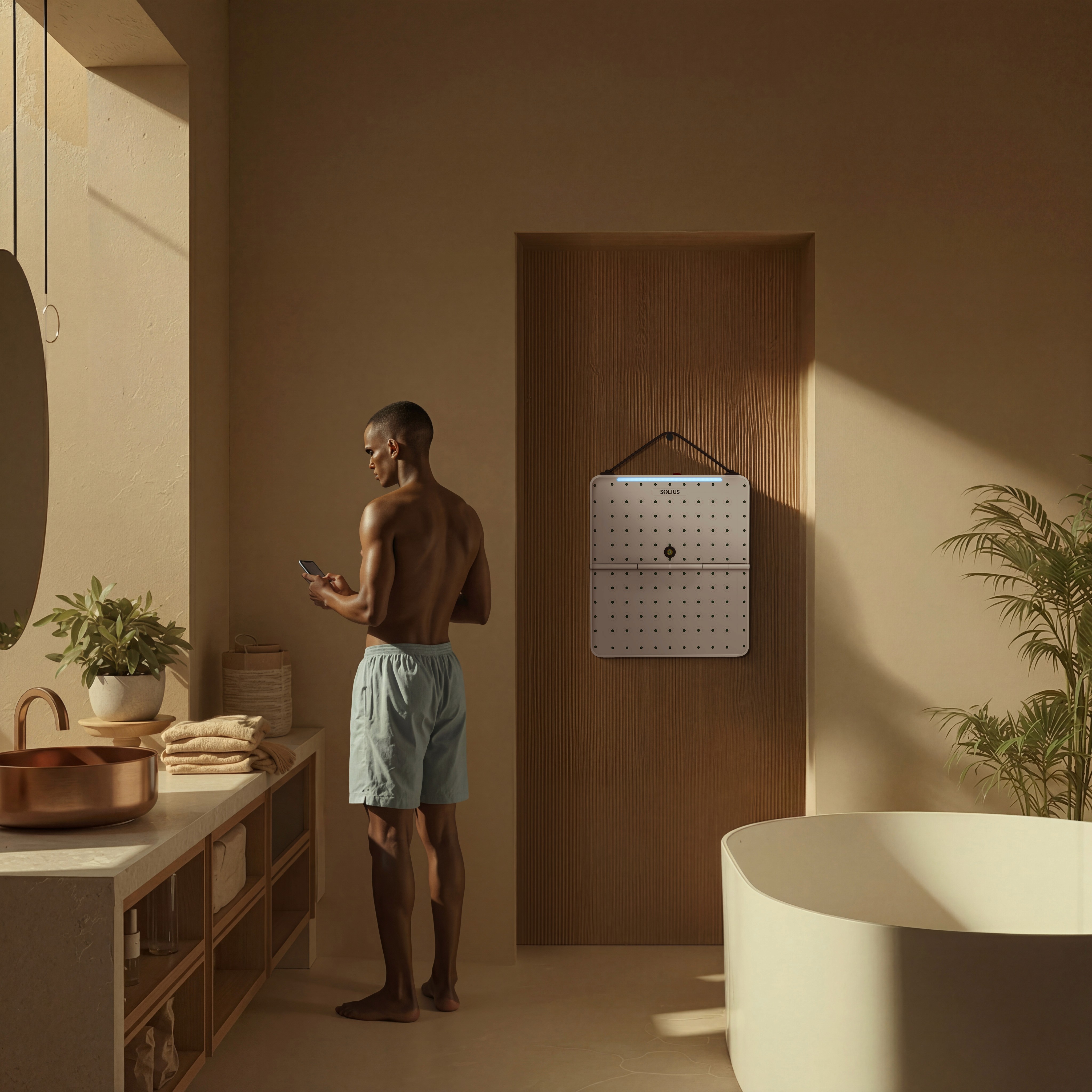
Set up anytime, anywhere
Solius is portable, no mounting or installation required.

02
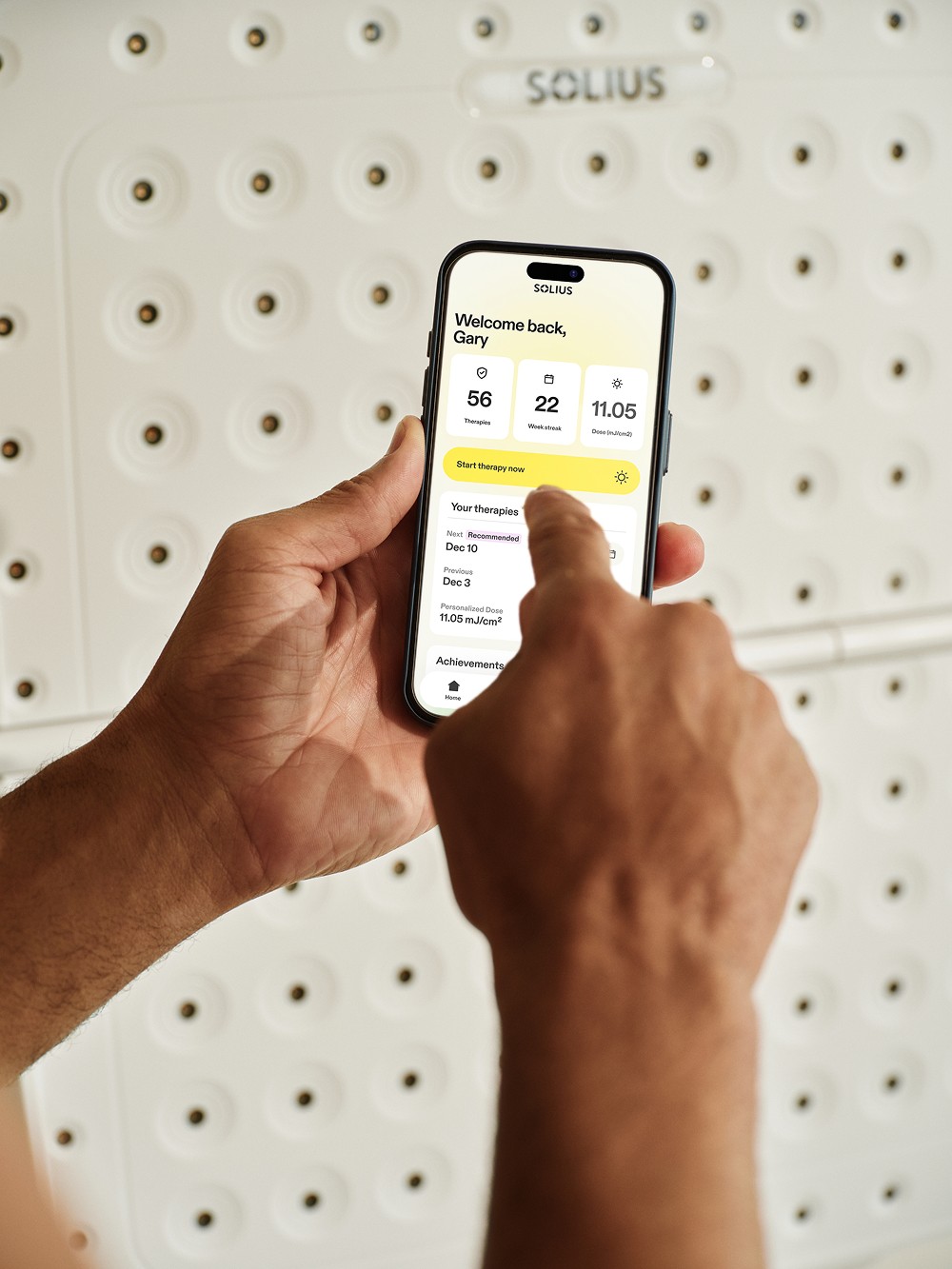
Personalize your dose
The Solius app guides you through smart skin analysis to calculate your optimal dose.
03
Repeat weekly
Solius therapies are approximately 5 minutes, once per week to optimize health benefits.
Research partners













As featured in




Frequently asked questions
Is Solius safe?
Solius delivers more UVB light benefit than natural sun with significantly less risk by delivering UVB light in a highly controlled, consistent, and measured way. While all UV light exposure carries some risk, Solius minimizes risk by using a precise wavelength and a built-in skin sensor that personalizes every session.
Solius sessions last approximately 5 minutes and deliver an equivalent vitamin D dose of 60 minutes of natural sun exposure on a sunny afternoon at midlatitude (ASTM G173 AM 1.5 or a UVI of 9-11+) - making Solius 12x more efficient at stimulating vitamin D per minute of exposure in optimal conditions.
To put it into perspective, a full year of weekly Solius sessions is less UV exposure risk than just five-minutes of afternoon sun, or less than one second of sun exposure per day.
When measured across the full UV light spectrum, Solius delivers approximately 99% less total UV radiation compared to natural sunlight. This combined with the novel Solius personal dosing system, ensures you receive a safe and effective dose personalized to your skin. This significantly reduces the likelihood of burning, tanning, premature aging, or UV light-related skin damage.
How is Solius different from vitamin D supplements?
Solius activates your body's natural vitamin D production through light, unlike pills that depend on digestion and can fail for those with malabsorption challenges. Rather than relying on the liver and kidneys to process supplements, the hormone production begins with UVB exposure on the skin, where vitamin D is meant to be produced. Vitamin D produced through Solius is self-regulating and balanced, helping your body create exactly what it needs. In a published clinical study (Shirvani & Holick, Anticancer Research 2025), Solius produced an average individual increase of 76% (10.2 ng/mL) in serum vitamin D.
Vitamin D created naturally through light exposure lasts longer in the body and supports broader biological processes tied to mood, immunity, and metabolic balance. Beyond vitamin D, UVB light also helps activate other light-related biological pathways that supplements cannot reach, supporting whole-body health, vitality, and overall well-being. It’s a more complete and naturally aligned way to support your health from the inside out, and unlike supplements, Solius is FDA-cleared.
Many sunlight-associated health benefits do not appear with oral supplementation alone. This suggests that UVB light therapy is more than vitamin D. While vitamin D is the most studied biomarker of sun exposure, it is likely not the primary mechanism of UVB light therapy. Scientific research shows that UVB light therapy activates hormone production, stimulates favorable metabolites, releases nitric oxide, and fosters a diverse microbiome.
How is Solius different from the sun?
Sunlight is difficult to dose, varies by season and weather, and includes wavelengths that can damage the skin. Solius UVB light therapy is controlled, consistent, and personalized to your skin using an advanced sensor that ensures each dose is right for you.
The sun provides both helpful and harmful UV light. While natural sunlight triggers vitamin D production, it also includes UVA light that can damage skin and increase long-term health risks. Solius isolates only the precise UVB wavelengths proven to stimulate vitamin D production, without the excess UV radiation that causes burning, aging, or DNA damage. Solius provides the UVB light health benefits of the sun with 99% less total UV risk.
How is Solius different from SAD lamps, red light therapy, or tanning beds?
Solius’s novel and innovative technology uses a precise spectrum of light that delivers the benefits of UVB light exposure to the skin. It is a different technology from SAD lamps, red light therapy, and tanning beds.
SAD lamps and red-light devices use lower energy visible light - not UVB light - and therefore do not activate UVB-linked biological responses.
Tanning beds emit mostly UVA wavelengths (often 95% or more) associated with aging and skin damage, and tanning beds stimulate negligible amounts of UVB health benefits like vitamin D.
Solius uses precise UVB wavelengths that research shows activate hormone production, promote favorable metabolites, and foster a diverse microbiome, without the harmful UVA wavelengths found in tanning beds or natural sunlight.
How does UVB light impact your health?
Several large population studies, such as Avoidance of sun exposure as a risk factor for major causes of death and Higher ultraviolet light exposure is associated with lower mortality, have shown that greater exposure to sunlight is linked to lower mortality and longer life expectancy. Although this has often been attributed to vitamin D, supplementation studies have not consistently shown the same benefits, suggesting that vitamin D explains only part of the effect.
The resulting publication from a 2024 expert review, Beneficial health effects of ultraviolet radiation: expert review and conference report, brought together clinical and biological research to show that UVB exposure influences multiple systems in the body - including cardiovascular, immune, metabolic, and neuroendocrine pathways - through mechanisms that extend beyond vitamin D.
Mechanistic studies help explain how this works. Photo-neuro-immuno-endocrinology: How the ultraviolet radiation regulates the body, brain, and immune system describes how UVB exposure activates a broad range of hormones, neurohormones, neurotransmitters, and immune mediators - including serotonin, dopamine-related peptides, and anti-inflammatory compounds. These signals can affect mood, stress regulation, energy balance, and immune function.
Similarly, How UV Light Touches the Brain and Endocrine System Through Skin, and Why shows that UVB can initiate communication between the skin and the brain through vitamin D-independent pathways. This includes the production of signaling molecules such as beta-endorphin and other peptides that influence stress responses, behavior, and hormonal activity.
Research from the University of British Columbia demonstrates that UVB also impacts the gut. Their study The gut-skin axis: a bi-directional, microbiota-driven relationship with therapeutic potential shows that UVB can alter gut-related immune and metabolic processes, partly through interactions with the microbiome, helping regulate inflammation and barrier function.
In addition, Impact of ultraviolet radiation on cardiovascular and metabolic disorders: The role of nitric oxide and vitamin D highlights that UV exposure can increase nitric oxide levels in the body, which helps relax blood vessels, improve circulation, and potentially reduce cardiovascular risk - again, independently of vitamin D.
Overall, this body of research indicates that UVB exposure acts as a broad regulator of human physiology, influencing multiple interconnected systems beyond its role in vitamin D production.
How does Solius differ from narrowband UVB phototherapy devices used to treat skin conditions?
UV light has been used in medicine for over a century, including early dermatology treatments using phototherapy to treat skin conditions as recognized with the 1903 Nobel Prize. While both Solius and traditional phototherapy devices use UVB light, they operate at different parts of the UVB spectrum.
Narrowband UVB phototherapy is primarily used to treat chronic skin conditions such as psoriasis, eczema, and vitiligo, leveraging UVB bulb technology developed in the 1980s that emits a peak wavelength at 311–313 nm. While referred to as “narrowband,” these bulbs also have significant secondary emissions outside the intended range, including harmful UVA emissions.
Solius delivers nearly 3X more beneficial vitamin D-stimulating UVB light than narrowband UVB phototherapy and is designed to work beyond the skin to safely deliver the beneficial biological effects of sunlight, including vitamin D₃ production and other light-driven pathways linked to metabolic, hormonal, microbiome, and immune health.
Decades of research show that the body produces vitamin D most efficiently in a specific portion of the UVB range, roughly between 290–315 nm, with peak effectiveness around 295–297 nm. Solius is tuned to ~293 nm, placing it close to this biological sweet spot and closer than traditional phototherapy devices. At this wavelength, Solius is considerably more powerful than traditional narrowband UVB — a starting dose of 200 mJ/cm² of narrowband UVB is roughly equivalent to just a 12.5 mJ/cm² erythemally weighted Solius dose. Within the UVB spectrum, even small changes in wavelength can significantly influence biological effects.
Unlike traditional narrowband phototherapy systems, Solius incorporates an integrated safety and dosing system. This includes personalized dosing based on a patent pending and FDA-cleared skin sensor, automatic dose adjustments based on skin response, individual mobile app profiles for each user, therapy response feedback questions, distance sensing to ensure proper positioning, AI-assisted protective eyewear detection for eye safety, and enforced one day lockout intervals between sessions to prevent overexposure.
Solius is the first FDA-cleared UVB light therapy device for over-the-counter use to provide systemic health benefits, reflecting its focus on safe, consistent use.