



Table of Contents
Key takeaways
The sun emits three types of ultraviolet light — UVA, UVB, and UVC — but Earth’s atmosphere blocks UVC and only UVA and UVB rays make it to Earth.
Understanding the differences between UVA vs UVB rays is important for skin health, to avoid the risks associated with each light, and to learn how to get the benefits of UVB without the downsides.
Factors like your skin tone, where you live, and the type of sunscreen you use can also impact your personal UV exposure from the sun.
Confession time: I hated my physics class in school, especially the unit on the different types of light. The idea that there’s invisible light, including ultraviolet (UV) light, isn’t an easy concept to wrap your mind around. Throw in that there are multiple types of UV light, including UVA and UVB, and it’s no wonder I pulled many all-nighters before physics exams.
Luckily, this article will be much more digestible than a science test while still answering the question: what is the difference between UVA and UVB light? The two light types differ in terms of health benefits, how likely they are to increase the risk of skin cancer, and how prevalent they are in different geographic locations and seasons. We’ll also look at how to assess your UV exposure level and ways to get the benefits without the potential harms.
Quick Answer — What’s the Difference Between UVA and UVB?
UVA light makes up the majority of UV light reaching Earth because it isn’t absorbed in the ozone layer. It penetrates deep into the skin, causing aging and indirect DNA damage. UVA is present year-round and can penetrate through windows.
UVB light is primarily absorbed by the ozone layer, though some reaches Earth. UVB stimulates vitamin D production and may influence several neuroendocrine and immune signaling pathways that are being actively studied. UVB availability depends on the season, geography, weather, and time of day.
The Science Behind UV Light
According to the CDC, light is energy that originates from a source, such as the sun, and travels at the speed of, well, light. That explanation may bring up images of the visible light we see from the sun, but according to a 2022 review in the Journal of the American Academy of Dermatology, only 50% of sunlight is visible.
The other half comes from other types on the electromagnetic spectrum, including ultraviolet (UV) light.Where UV light comes from
“Ultraviolet light is a part of the electromagnetic spectrum that comes from heated gasses, such as the sun,” says Jan Dutz, MD, FRCPC, Professor and Head of the Department of Dermatology and Skin Science at the University of British Columbia.
Per the CDC, there are some artificial sources of UV light too:
Grow lamps
Tanning beds
Mercury vapor lighting
Some fluorescent lights
Some lasers
UVA, UVB, and UVC — what happened to UVC?
UV light can be divided into three groups based on wavelength:
UVA light: UVA light has the longest wavelength (between 315-400 nm). It’s the most likely to reach the Earth’s surface. Dr. Dutz adds that it also penetrates deepest into the skin. Tanning beds are primarily UVA light.
UVB light: The ozone layer blocks most UVB light (between 280-315 nm), though some still gets through. The amount of UVB on Earth is highly dependent on geographic location, weather, and time of day. While UVB penetrates the skin, it doesn’t go as deep as UVA. Solius is an example of a UVB light therapy device.
UVC light: The wavelength of UVC is 100-280 nm. While UVC light from the sun is absorbed by the ozone layer, Dr. Dutz mentions that it’s used in hospitals to kill bacteria and viruses.
UV type | Wavelength | Amount reaching Earth from the sun | |
UVA | 315-400 nm | Majority of the UV light reaching Earth: 95% | Sometimes more than 2mm |
UVB | 280-315 nm | Minimal: 5% | Only the surface layers |
UVC | 100-280 nm | None | Only the surface layers, if at all |
What UVA Rays Do to Your Body: Benefits & Risks
UVA light is available year-round, regardless of where you live. It can cause “invisible damage,” though it has a few possible benefits too.
UVA benefits
First up: the benefits, which are admittedly few and far between. UVA may trigger nitric oxide release. Nitric oxide release may contribute to vascular and cellular benefits and may help reduce oxidative stress, per a 2024 PNAS review. Oxidative stress is associated with the development of certain chronic diseases, such as cardiovascular disease, and inflammatory diseases, according to a 2025 Nature review.
Another 2022 Nature review shows preliminary evidence associating UVA phototherapy with modest reductions in blood pressure.
Why UVA is called the “aging ray”
Dr. Dutz says UVA is often referred to as the “aging” ray since it’s associated with premature wrinkles and other signs of aging skin. “UVA causes skin aging through breakdown of collagen,” he explains. According to the National Institute on Aging, a loss of collagen causes the skin to look older and to be more fragile.
UVA and skin cancer
“Which UV ray causes cancer?” is actually a trick question, because all UV radiation is associated with a higher skin cancer risk. That said, UVA and UVB contribute to skin cancer development through different mechanisms.
“We used to think that all skin cancers were caused by UVB, but it turns out that they’re probably not,” says Dr. Dutz. “They’re probably caused by the UVA, because UVA indirectly damages DNA.” When DNA is damaged and the body fails to repair it, it might lead to mutations that we refer to as cancer cells, per a review in Photochemistry and Photobiology.
UVB’s Benefits and Risks
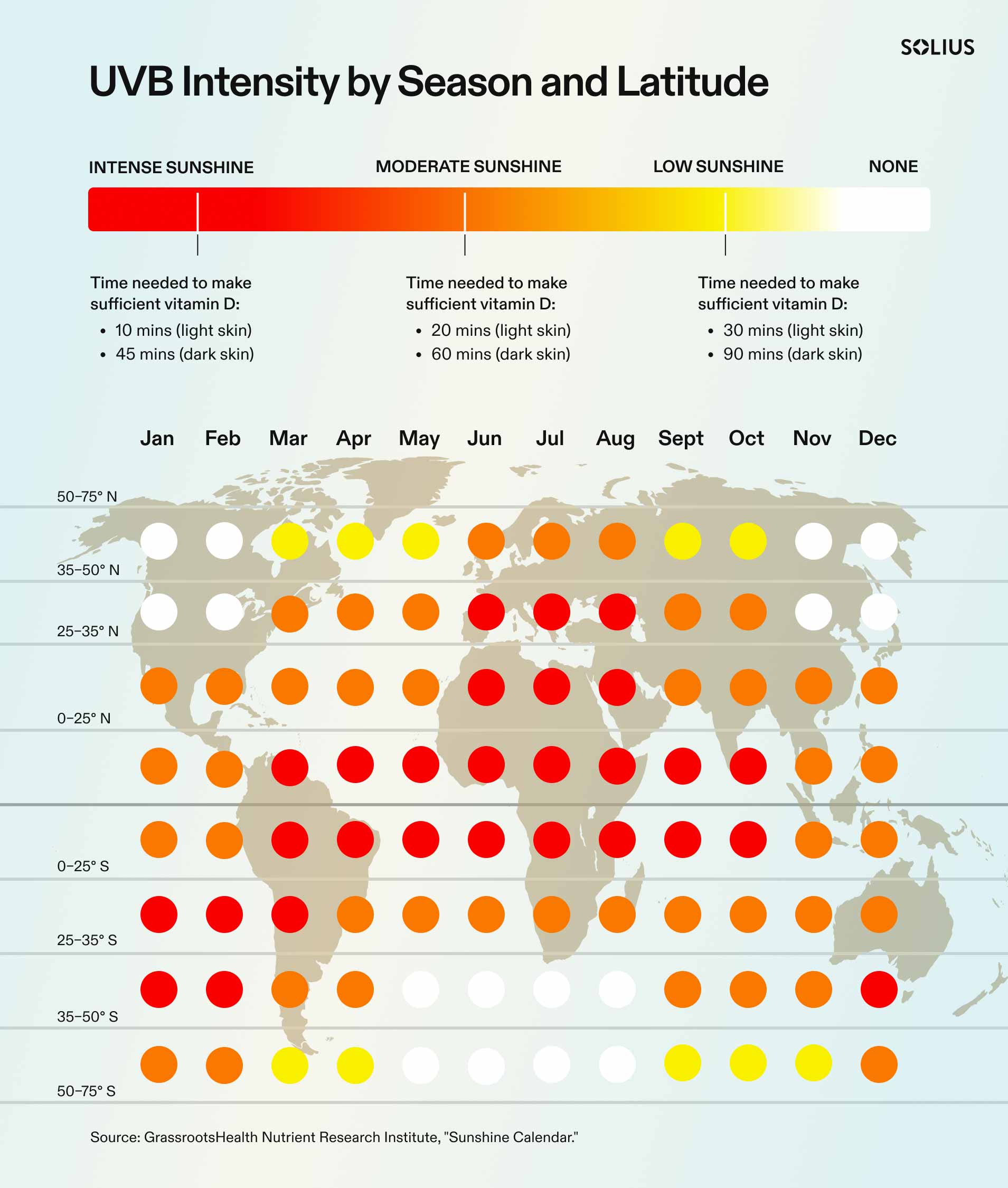
You can think of UVB light like that retired family member who now spends winters in Florida. UVB is most commonly found in places close to the equator, and its presence in any given location depends on the weather, season, and time of day.
The UVB-vitamin D link
If you were asked to list the benefits of UVB, vitamin D would probably come to mind first. And the rumors are true: When UVB light hits the skin, it stimulates the body to produce vitamin D, which UVA light does not do.
Once UVB light hits the skin, it photochemically converts 7-dehydrocholesterol (7-DHC), a sterol (or type of fat) produced in skin cells, into previtamin D3, per a 2024 Molecular Cell review.
Your body temperature then turns previtamin D3 into vitamin D. You can think of body temperature like an oven that metaphorically bakes the raw dough (previtamin D3) into cookies (vitamin D3).
The body can then use vitamin D for various purposes. A 2025 review in Nutrients lists some: Vitamin D is essential for bone health, muscle function, and immune function. Research continues to evaluate its role in preventing other chronic diseases.
But there is a catch. Most vitamin D production is stimulated by a specific UVB wavelength range that’s considered “peak synthesis.” The published action spectrum for the production of vitamin D listed that peak as 295-297 nm. UVB above or below that may also stimulate vitamin D production, though not to the same extent.
Other UVB benefits
The vitamin D-related effects are enough to earn UVB its reputation as a driver of health, but there are other noteworthy benefits too. When the skin is exposed to UVB light, it triggers various chemical, hormonal, immune, and neural signals, per a 2024 PNAS article. These changes are being investigated for their potential effects on:
Mood regulation
Immune regulation
Neurological health
Experimental studies such as a 2024 research paper in Molecular Biology Reports suggest UVB exposure may influence cholesterol metabolism.
Dr. Dutz mentioned that it may also influence the gut microbiome in a positive way, a claim which his own research and another 2025 review in Frontiers in Medicine support. Additional human studies are needed to determine clinical significance.
UVB is also used to help treat skin diseases, says Dr. Dutz, usually through a device that can control the amount and duration of UVB on the skin. A 2021 meta-analysis in Cureus suggests UVB light therapy may be one of the most effective treatments for psoriasis, eczema, and some other skin conditions—and it comes with minimal side effects compared to other treatment options.
Sunburn — the visible sign of UVB damage
Now onto the not-so-nice side of UVB. Dr. Dutz says UVB is nicknamed the “sunburn UV” because it causes sunburn (which goes by the medical term erythema). While sunburn can cause redness, pain, and a warm-to-touch sensation in the short-term, not all cases lead to long-term damage.
However, according to the FDA, severe sunburn is associated with a higher melanoma risk. That’s because sunburn damages skin cells that may contain genes linked to skin cell growth, per the American Cancer Society. If damaged, cancer cells may grow.
Possible DNA damage
When UV damages skin cells, there may also be an effect on DNA, per a 2021 Biomedicines review. UV-related DNA damage is associated with immune system suppression, the development of skin cancers, and premature skin aging.
That 2021 review makes it clear that both UVA and UVB light may cause this DNA damage. Although cells have repair mechanisms for both types of damage, these mechanisms are not always completely effective, particularly after repeated or excessive exposure.
“You can think of the repair mechanism like going to the gym and doing a bicep curl; this creates micro-tears in the muscle, allowing the body to repair that muscle for it to come back stronger,” says Dr. Dutz. Similarly, some exposure to UVB light triggers the DNA repair mechanism to improve the skin cells. Too much UVB light, just like an overloaded bicep curl, can create too much damage, so finding your personalized amount of UVB light to see an effect but not create harm is the trick.
Why is UVA Light Worse?
Traditionally, people viewed UVB light as worse because there are immediate, visible harms (aka sunburn), says Dr. Dutz. However, both UVA and UVB contribute to skin cancer through different biological mechanisms. UVA plays an important role in photoaging and indirect DNA damage, while UVB is more strongly associated with direct DNA damage and sunburn. Not to mention that UVA is present year-round and can even reach you indoors through glass. It’s also quiet, meaning the harms of UVA can take years or decades to develop.
How UV Exposure Changes by Location, Time, and Season
Not to sound like a broken record, but most UV from the sun is UVA, no matter where you live or what the weather forecast predicts. That said, factors like location, time of day, and even cloud coverage do impact the UVA to UVB ratio.
Location and latitude
The real estate rule of location, location, location also applies to UVB. Per a 2022 Nutrients review, at many northern latitudes (think most of Europe, Canada, and the top half of the US), UVB light is basically unavailable from October through March, even on sunny days. Places like southern California or Florida have more months where UVB light is around.
UVA, however, doesn’t disappear seasonally. Dr. Dutz warns that in northern locations, such as his city of Vancouver, Canada, the UVA prevalence is higher, meaning people get less UVB from the sun—especially in winter or on cloudy days.
Time of day
Even when UVB is “in season” at your latitude, it’s only around when the sun’s angle places it above 45 degrees, per a review in the International Journal of Environmental Research and Public Health. You can measure this easily: if your shadow is longer than you, the sun’s angle is less than 45 degrees. This means the morning and evening sun primarily contain UVA light, regardless of brightness.
Altitude, reflection, and cloud coverage
Ever go on a ski trip and come home sunburned? If so, it probably seems a bit odd because we associate sunburn with the beach. Turns out, ski resorts are sunburn hotspots for two reasons. The first is that skiing often takes place at higher altitudes, which are also exposed to more UV light. The second is that snow reflects up to 80% of UV light, according to the U.S. Environmental Protection Agency. And the unfortunate cherry on top is that snow occurs in winter, so it’s mostly UVA light reflected back.
Dr. Dutz adds that clouds block out UVB too. “You still get exposed to UVA even when it’s cloudy, because the clouds don’t filter it,” he explains, adding that even if there isn’t a sunny moment in the day, sunscreen is still essential to protect the skin from UVA light.
Indoor exposure
If you’re sitting near a window while reading this, you might be asking, “does UVA penetrate glass?” The answer, most likely, is yes because standard window glass blocks UVB light, while UVA light can get through, per a 2022 review in the International Journal of Molecular Sciences. That means that 30-minute drive to work or that weekend reading session near a window provides all the risks of UVA without the UVB benefits.
Why UVB is Hard to Get from the Sun
Imagine you’re at a beach in the Caribbean, a tropical drink in hand and the sun warming your skin. That’s one of the scenarios where the sun will provide the highest amount of UVB light, yet even then, you’re still getting mostly UVA.
And most of us don’t live on a tropical island (if you do, I’m very jealous). That means we’re getting even less UVB from the sun. Dr. Dutz also mentions that many of the UVB benefits come from specific UVB wavelengths, not the entire UVB spectrum.
With sunlight, you get all the wavelengths. Meanwhile, personalized UVB light therapy devices, like Solius, make it easier to not only get UVB light, but control which wavelengths you get. They can also provide the right amount for your skin tone, which sunlight doesn’t take into account.
Skin Tone, Melanin and UV Risk
Skin tone influences how much UVB light you need, per a 2020 review in Experimental Dermatology. People with darker skin tones often need more UVB exposure because their skin is less sensitive to it than people with lighter skin tones. “Darker skin tones are due to more melanin,” explains Dr. Dutz, “and this melanin protects the skin from sun damage.”
Dr. Dutz notes this protection doesn’t extend to UVA light. It does, however, mean people with lighter skin tones may need less UVB exposure to get its benefits whereas people with dark skin tones require more.
Sunscreen That Actually Blocks UVA
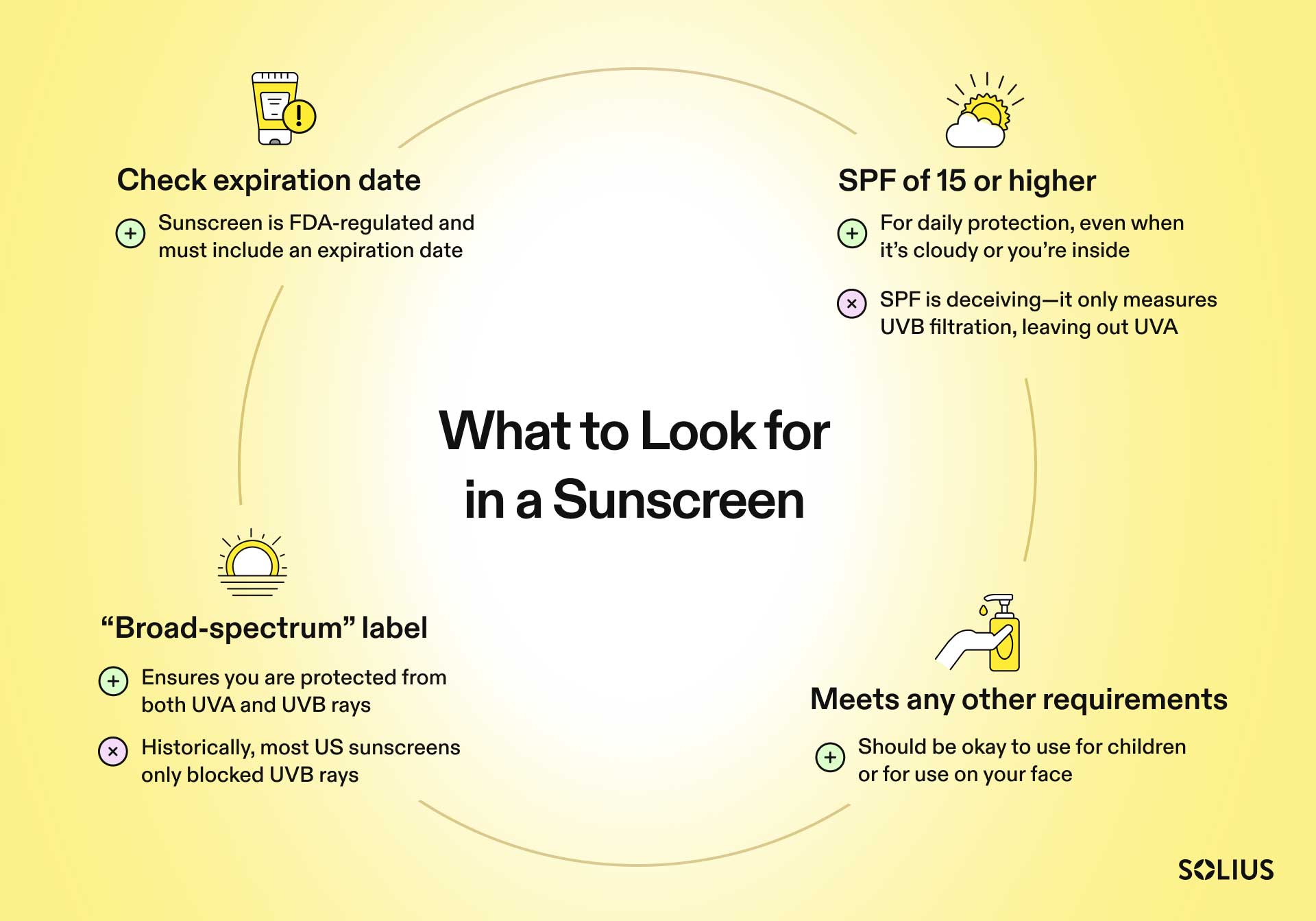
Perhaps the most effective way to protect yourself from the harms of UVA is with sunscreen. Yet Dr. Dutz says that until recently, most sunscreens in the US only protected us from UVB light. Canada, many parts of Europe, and other countries have had UVA/UVB sunscreen for longer.
Even today, the FDA warns that not all sunscreens protect from both. To get a UVA/UVB sunscreen, you have to purchase sunscreen that advertises itself as “broad spectrum.”
You might have also noticed that sunscreen advertises an SPF number. SPF stands for sun protection factor, which is deceiving since it only refers to how much UVB light a sunscreen filters out. Still, aim for an SPF of 15 or higher, per the FDA.
The Bottom Line
While both UVA and UVB light come with possible benefits and risks, the two are definitely not equal. UVB plays an important role in vitamin D synthesis and has established medical uses under controlled conditions. Unfortunately, the sun provides very little UVB light within that range, even on a sunny summer day…and it produces a lot of harmful UVA.
Frequently Asked Questions (FAQs)
Is UVA or UVB worse for skin cancer?
Traditionally, UVB was associated with a higher risk of skin cancer. However, the American Cancer Society points out that more recent research suggests that UVA light plays a bigger role in some skin cancers.
Does UVA penetrate windows?
UVA rays commonly penetrate windows. These rays are associated with faster aging of the skin and some skin cancers, so it’s important to protect yourself with broad spectrum sunscreen, even when inside.
Can you get UV damage on a cloudy day?
Even on a cloudy day, UV rays still break through. There are two types of UV rays from the sun that reach us here on Earth: UVA and UVB. Because the UVA wavelength is longer than the UVB wavelength, more UVA light comes through on a cloudy day. This type of light is responsible for wrinkles, aging skin, and a higher risk for some skin cancers.
Editorial Notes
This article is intended for general informational purposes and does not constitute medical advice. Consult a qualified healthcare provider before making changes to your supplement regimen or sun exposure practices, particularly if you have a medical condition or take medications that may affect vitamin D metabolism.


